
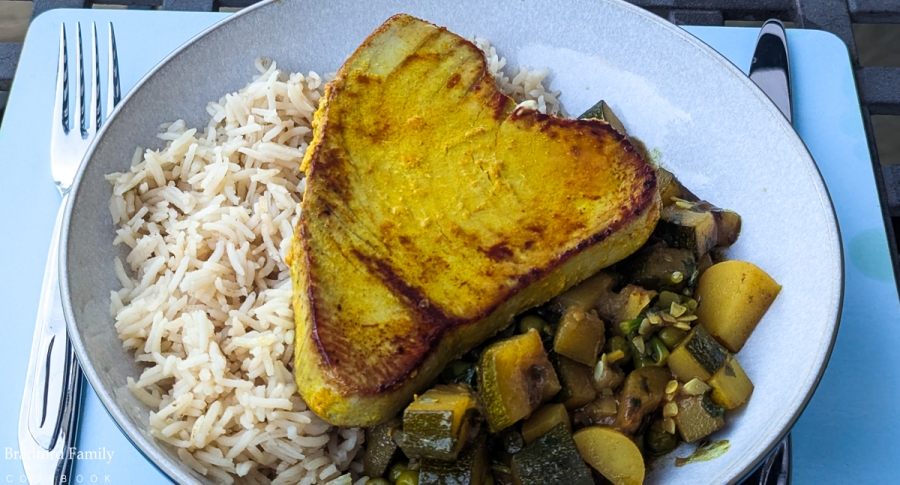
My favourite cookbook (or any book for that matter – yes, I do read cookbooks for pleasure sometimes) that I own is Charmaine Solomon’s Complete Asian Cookbook. If you can get hold of it, do (same with Eat your greens by Sophie Grigson).
You can see that mine is "loved"
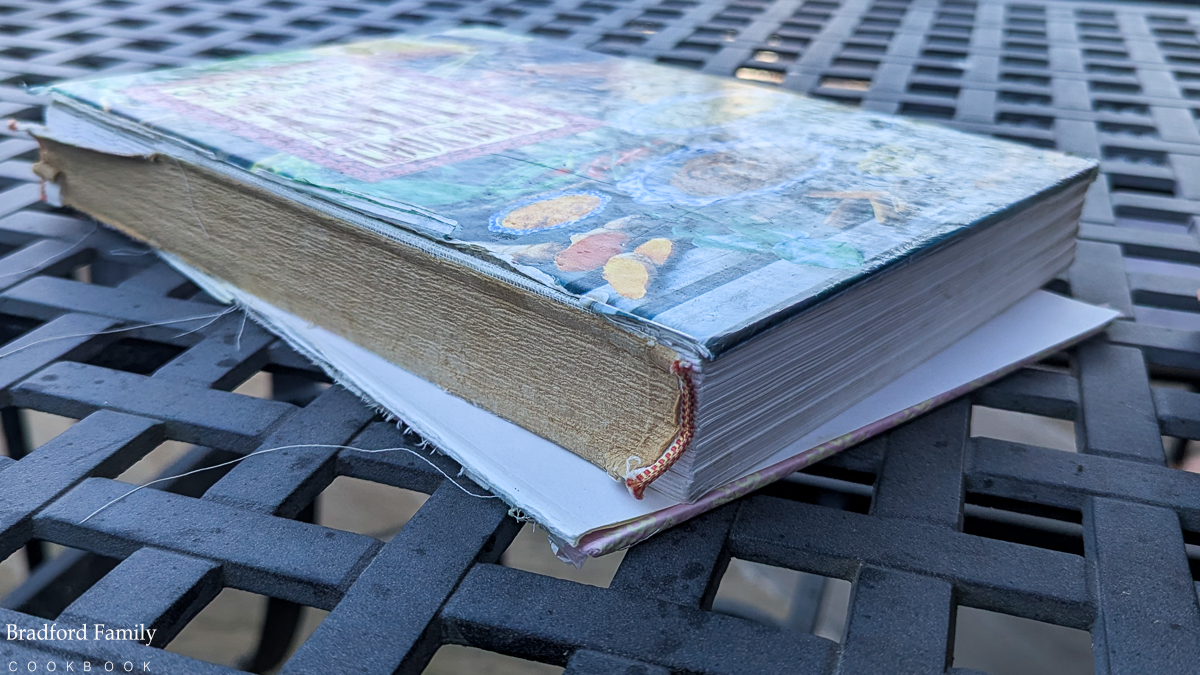
A properly loved cookbook - falling apart on the outside from the amount of use, and covered in food on the inside.
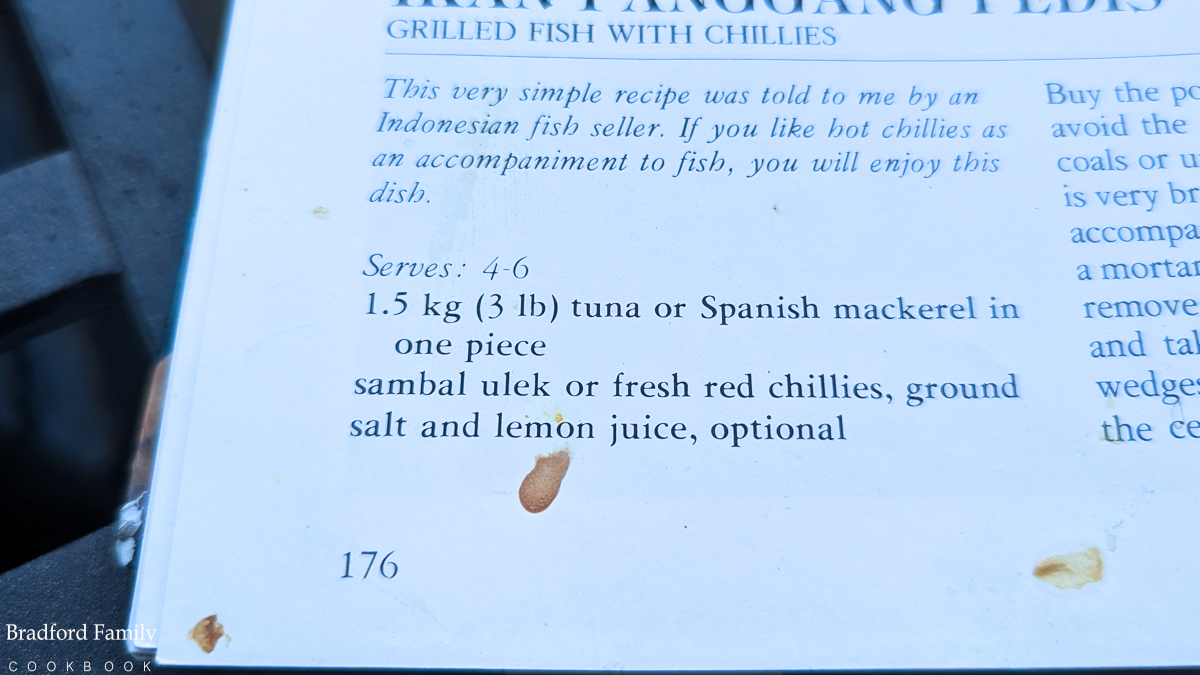
It has a chapter on each of many Asian countries and one of the most neglected cuisines in the UK has to be Indonesian. Rendang is elsewhere on here and is fabulous: I posted that we were eating it on facebook and a dear friend who was then in Sydney and who had eaten it with us before said “I’d walk home for that”. Do it. It’s amazing
This fish curry is a beautiful thing too and I’m going to give you her (Charmaine’s) recipe by describing what I’m doing differently this time:
The fish
This is where it is similar to the original. The book recommends dark fish steaks. Tuna is the obvious one as they are huge so steaks are easy to get. Mackerel would be beautiful, but I’m not sure what a steak would look like so would use whole skin-on fillets, crisp the skin, and put them on top at the end. The original marinates the steaks in salt and lemon juice and places them without frying or any other treatment into the liquid near the end of cooking.
So, step 1 in the original is to cover the steaks in a small amount of salt (half a teaspoon?) and the juice of half a lemon.
I’ve done the same but also added half a teaspoon of turmeric.
In this version I am searing the steaks at the end instead of cooking them in the sauce and making the sauce into a veg curry for the fish to sit on top of.
The Sauce
Most curries start with a few key ingredients (usually onion, garlic, chilli, ginger) to be fried in the same way the Italians and Spanish do a sofrito: build a base of flavour by gently caramelising the onions, sweetening the chillis and generally making a beautiful base to work from.
You then build more spice, add the liquid(s). It’s not as stringent as that, but it usually starts with gentle frying.
This is different.
The original places coconut milk, onion, garlic, ginger turmeric, shrimp paste, lemongrass and salt into a pan – raw and all at once.
You bring it to simmer and when the onions are cooked, it’s ready for the rest of the ingredients.
This is similar, but I am leaving out the lemongrass and I’m cooking vegetables in the sauce: put the coconut milk, shallots, ginger, garlic, chilli, turmeric and salt into a pan and do the same thing before adding the veg, frying the fish and putting the fish on top.
Herbs and tamarind
If you can get tamarind and make liquid from it then do that – you need about 100ml. But I’m using concentrate (2 tsp) and adding about 100ml of water.
Chopped basil goes in right at the end, but I’ve chosen to use coriander today: I like the way it goes with coconut and tamarind.
The coconut milk
In the UK (maybe in the “West”) we are used to fairly thick curry sauces and rice as a side-dish.
Rice is the meal and the curries and other accompaniments are there to flavour it, so sauces in Indonesia and Thailand (for example) are often thinner than we are used to in restaurants here.
”Thin coconut milk” is roughly what we have in tins but diluted with the same amount of water and “Thick” is what comes out of the tin. The original recipe uses thin cocunut milk at the start and finishes with the addition of thick at the end. I am completely leaving this out and just using undiluted tinned coconut milk. The tamarind liquid/water will thin it enough in my opinion.
Method
Mix the salt, turmeric and lemon juice together and coat the fillets in a plastic bag. Set aside.
Place the coconut milk, shallots, garlic and ginger in a saucepan with the turmeric, salt and chilli powder.
Bring it to simmering point and gently simmer until the shallots are cooked (15 minutes should do it).
When the sauce is done, add the vegetables, tamarind liquid and chopped coriander and cook until just done.
Heat a frying pan big enough for both steaks/fillets with a little neutral oil. Fry the fish to your liking – I seared these for 90 seconds – while doing that plate the curry and some rice and when the fish is cooked, place it on top.
That’s it!