
I’ve recently moved, but my last place on the Essex coast has a great pub - The Victory. We all have nicknames in there - I’m Spanish; Squiddly (longer story); Ostrich (tall); Sugar Boy (diabetic - brutal, but there you go), Timber (fell over once - that was enough); Scott-the-Scot (Christened James, but goes by his middle name of Scott so no mystery there, and he’s, well, a Scot).
Scott used to be a butcher and is a real foodie so inevitably our conversations drift that way when we meet. Lamb shanks and all sorts of offal were simply given away back in the day, or at least were so cheap they were often fed to dogs. My own dad used to feed ox heart to his fish!
I am not obsessional about the price of things, but it annoys me that the way we are sold things can mask their price if you are not careful (big jars of coffee being more expensive that the same amount in smaller jars, or those refill bags that you assume are cheaper than the jar you are refilling but aren’t1), and how things that used to be everyday or even considered low value are now priced like premium products.
Don’t start me on pulses which have a long, chequered class-history in the UK. In fact do start me, because I’ll be writing about them soon.
But meat is a different thing, especially red meat. Lamb shanks are often, per kg, more expensive than the whole leg. I love a shank: my biryani is made using slow-cooked lamb shanks that are then shredded and added to a different curry sauce before being layered into the rice, and the fact that it is that sort of cut and that sort of cooking process is what makes it better than, say, cubes of lamb thigh, so I am the opposite of a snob about cuts of meat.
But why has it changed?
Is it just marketing, or was it always about demand?
Was it artificially cheap before? Sheep have four legs, so four shanks; it’s not as though shanks are more plentiful than legs, so at a basic level they are sort of the same (other than the ratio of bone, sinew etc to meat if you calculate the cost per kb/lb).
So was it about cooking times? I can’t really find anyone discussing this online in terms of food history, but I think it’s likely that they were simply too expensive to cook properly. Most people had limited kitchen equipment until fairly recently; Mary Berry - still much-loved cook and food writer - started her career working for the gas board going to people’s houses when they got their first gas cooker and showing them how to use it by making a Victoria Sponge! We take a controllable oven, slow cookers and a host of other gadgets and appliances for granted, but they are actually new. So was it cheap to buy tougher cuts because slow-cooking them was expensive and difficult?
Nostalgia? Virtue?
There does seem to be a trend, or at least a feeling, among a lot of mainstream cookery programmes that hark back to traditional recipes. I think this is great - the loss of cooking skills over the last century is a tragedy with real-world consequences for our health and the burden on the NHS. Preserving and often updating these old recipes is fabulous and I’m all behind it. But if lamb shanks become trendy instead of a less-appreciated meat then does the price go up? It seems like it.
Any number of food programmes: “Today we’re doing a good, old-fashioned [faggot/pease pudding/whatever]”
Or is it about a reaction to MasterChef, Bake Off et al which started out as home cooks going on a journey but now have absurdly complex or technically difficult things in the first round? Is there a backlash towards tasty but not showy “honest to goodness” food?
Or is it just the reality?
Did we simply not pay enough for some things? Was the economic model of more traditional butchers that you needed to make a certain amount overall off of, say, half a carcass, and the market would take a premium on some bits and a hit (but at least a small contribution) on the others? Again, fillet is not more expensive to produce than flank or mince and if you’re buying whole animals the numbers need to work for the whole thing, not necessarily every individual cut.
Is it all relative?
I hosted a family barbecue this weekend, like a lot of people in the final summer bank holiday. We’re not much on bangers and burgers and I treat it more like a standard meal with a centre-piece and a bunch of side-dishes, bread etc.
In some ways, if we all ate better and treated meat as more of a luxury, we and the planet would be better off in lots of ways. maybe £60 for a leg of lamb in Waitrose (the price of one I saw in there on Friday) is proportionate (ASDA’s was around half that). If I had bought it it would have fed about 15 people (the benfits of butterflying it). (around £5 per person at the top end and half of that at a more normal price).
[There’s another article in the making on what I’ve learnt about party food, barbecues and picnics and all the years I went wrong, spent too much, threw too much away, and stressed myself out]
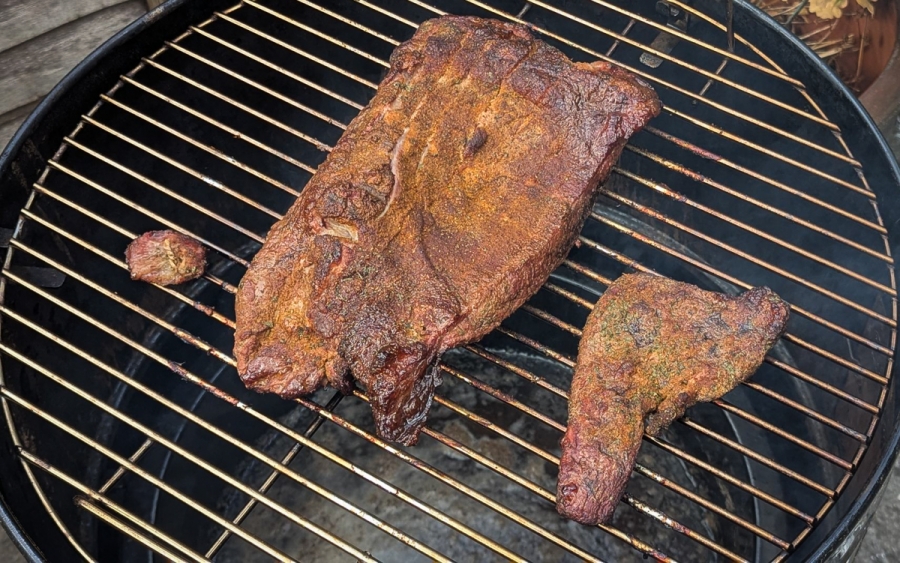
So my centre-piece was to be either a butterflied lamb leg or a slow-smoked piece of brisket. I was lucky enough to get a nice piece of brisket at Ferneygrove. It was over £40 (around £3 per person) which I wasn’t expecting, but I went for it anyway and it was magnificent!.
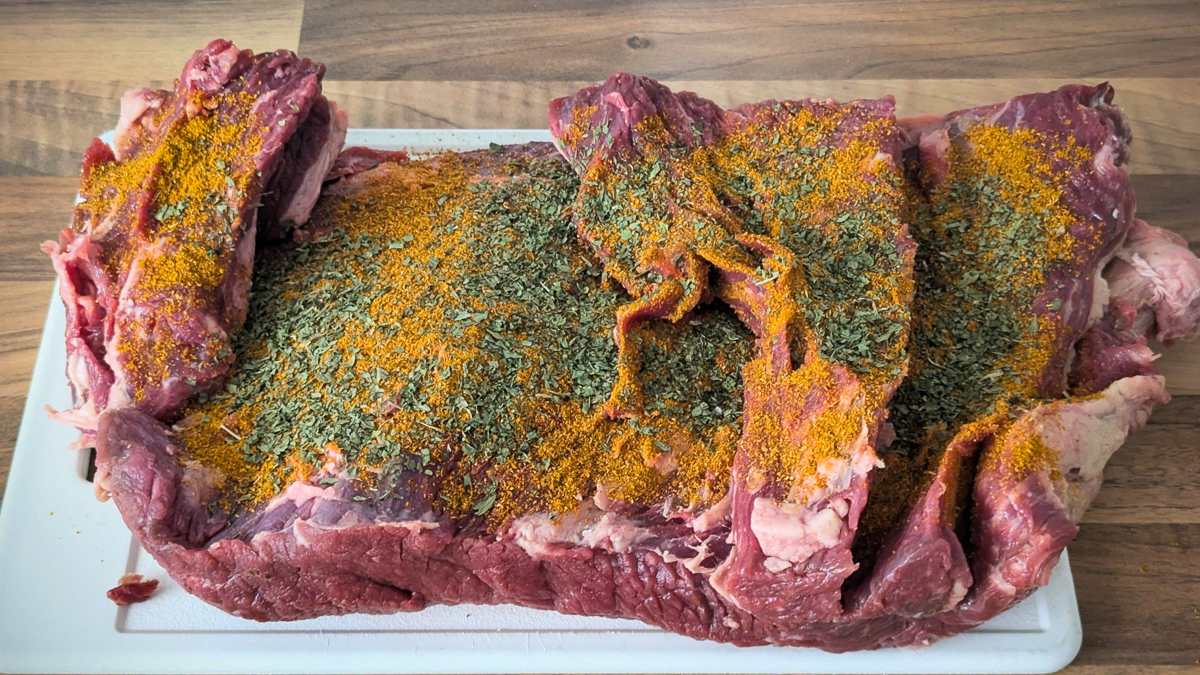
I won’t put a detailed recipe here as there are many people better than me at this all over the internet, but I simply covered it in shop-bought ras-el-hanout, black pepper and dried coriander leaves and left it in the fridge overnight before barbecuing over coals and apple wood for about 6 hours at around 140c. Longer would have been better but I just couldn’t get it going earlier or put lunch off for hungry people to give it more time later.
In some ways what I did alongside it was what made it. I’ll put that in another article because this was really originally about how food inflation in all its forms has really started to bite.
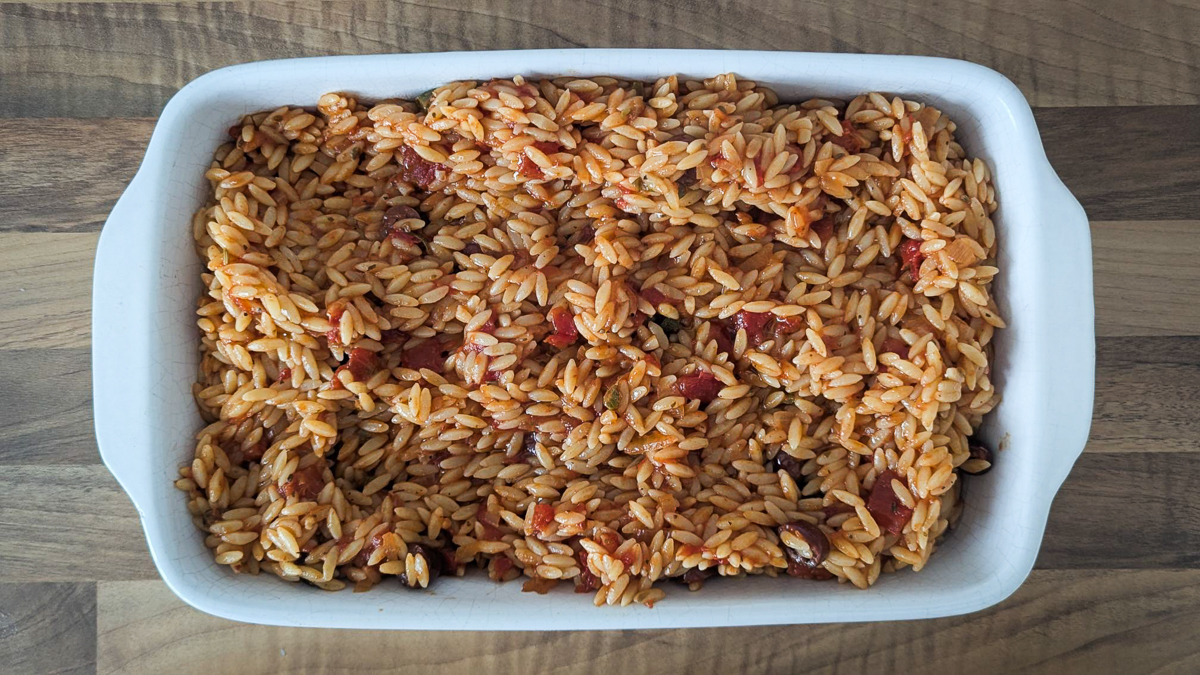
- A pasta salad. Orzo with something adapted from puttanesca
- A rice salad. Pesto, fresh basil, oil and capers
- A salad. Ordinary things as you’d expect and a simple vinaigrette.
- Salsa Verde
- Baked potatoes including some I halved, scooped, mashed with cheese and onions and put back in and baked. A bonfire night favourite as kids
- A roast chicken (there were kids and an elderly lady there who may or may not have wanted to try spicy smoked brisket
- Olives, bread etc. to snack on
So what am I really saying?
I’m not sure in some ways. I just know that buying what I know was cheap when I was a kid (because that was what we ate) and was still cheap in relative terms even a decade ago are simply not cheap any more. Stewing steak in supermarkets (chopped so you can’t see what you’re getting) is often more expensive £ for lb as sirloin steaks.
That said, if you know how to cook them and you know what to have with them they can go a long way.
It will be a long time before I pay £60 for a single leg of lamb though.